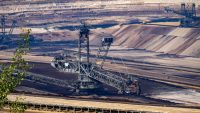

This week, Canada made a significant move to enhance its position in the global critical minerals market by announcing a CAD $165 million funding package aimed at advancing critical minerals projects. This initiative, announced on March 3, 2026, is part of a broader strategy to strengthen the country’s mining sector, improve federal permitting processes, and ensure a sustainable supply of essential minerals for clean energy technologies. The funding will support planning, development, and processing capacity, addressing a key bottleneck in the mineral supply chain.
- Market Reaction and Price Movements
- Analysis: Driving Factors Behind Canada’s Strategic Shift
- Context and Global Implications
Market Reaction and Price Movements
The announcement has sparked a positive reaction in the market, with shares of major Canadian mining companies experiencing an uptick. For instance, stocks of companies involved in lithium and cobalt production have seen gains of 2-4% since the announcement. Meanwhile, the global price of lithium has risen by 1.8% this week, reflecting increased demand expectations driven by policy support. According to industry reports, this aligns with broader market trends, as governments worldwide prioritize critical minerals to transition toward greener economies.
Analysis: Driving Factors Behind Canada’s Strategic Shift
Canada’s funding initiative comes amid growing geopolitical tensions and strategic realignments in the critical minerals sector. The recent US-Mexico Critical Minerals Action Plan and the ongoing Critical Minerals Ministerial involving 54 nations underscore a global recognition of the need for secure, diversified mineral supply chains. This Canadian effort aims to position the nation as a key player in this evolving landscape, providing a competitive edge in a market where demand is expected to surge with the global energy transition.
The launch of Canada’s new Mine Permit Navigator tool is designed to streamline federal permitting processes, reducing bureaucratic hurdles and improving project transparency. This tool is expected to expedite the development timeline for mining projects, potentially attracting more investment into the sector.
Context and Global Implications
Canada’s strategic moves are part of a broader international trend where countries are increasingly viewing critical minerals as strategic assets. The recent $2.6 billion uranium deal with India, also announced this week, highlights Canada’s commitment to using its substantial mineral resources to forge international partnerships. As demand for critical minerals such as lithium, cobalt, and nickel continues to rise, driven by electric vehicle production and renewable energy technologies, Canada’s proactive policies could serve as a model for other resource-rich nations.
Globally, the establishment of preferential trading areas for critical minerals, as discussed in recent international forums, could further enhance market stability and encourage sustainable mining practices. However, analysts caution that such developments must balance environmental considerations with economic imperatives.
Outlook: What to Watch Next
Looking ahead, market participants should monitor the implementation of Canada’s funding and regulatory initiatives, as these will likely influence investment flows and project timelines. Also, ongoing negotiations between the US, EU, and Japan regarding coordinated trade mechanisms for critical minerals could significantly impact global supply chains. Investors and industry stakeholders will also be keenly watching how Canada’s policies affect its competitive standing in the critical minerals market over the coming months.
While these developments present opportunities, they also come with risks. Market dynamics can shift rapidly, influenced by geopolitical factors, technological advancements, and regulatory changes.