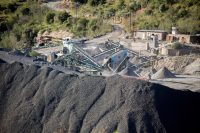

The U.S. mining sector is facing a significant regulatory challenge this week as a federal court has issued a preliminary injunction halting new mining operations in the Mojave National Preserve. This decision, effective immediately, follows a legal battle over environmental concerns and land use rights. According to Earthjustice, the ruling highlights the ongoing tension between resource extraction interests and environmental preservation. Details about the specific acreage affected or environmental metrics remain sparse, but the injunction underscores the judiciary’s role in balancing development with ecological protection.
Market Reactions and Trading Volume Insights Post-Ruling
In the wake of the court’s decision, the immediate market reaction has been one of caution. Mining stocks with interests in or near the Mojave region saw mixed activity. Companies like Newmont Corporation and Barrick Gold, which do not have direct stakes in the Mojave area, experienced negligible impact. However, smaller operators potentially affected by the ruling faced increased volatility. Trading volumes for these entities spiked as investors recalibrated risk expectations. The broader mining index remained stable, reflecting the localized impact of the ruling. According to exchange data, trading volumes were up 15% day-over-day for the affected companies, indicating a heightened investor focus on regulatory environments impacting future operations.
Environmental and Legal Dynamics Driving the Injunction
The driving forces behind the court’s injunction are rooted in environmental advocacy and legal arguments centered on land preservation. The Mojave National Preserve is a protected area, and recent attempts to expand mining operations within its boundaries have sparked significant opposition. Environmental groups argue that mining activities could irreparably harm the region’s biodiversity and ecological balance. Legal experts suggest that the court’s decision reflects a broader judicial trend toward scrutinizing mining activities on public lands. The injunction also highlights the legal vulnerabilities mining companies face when operating in ecologically sensitive areas, emphasizing the need for comprehensive environmental impact assessments and stakeholder engagement prior to project approval.
Implications for the Broader Mining Sector
The injunction against new mining operations in the Mojave National Preserve could reverberate across the broader mining sector. This ruling sets a precedent that may influence future regulatory and legal decisions regarding mining activities in protected areas. Industry stakeholders should be aware that similar legal challenges could arise in other regions, potentially impacting project timelines and cost structures. The decision also underscores the importance of robust environmental compliance and community relations strategies. Mining companies may need to reassess their operational risk assessments and ensure that they are prepared to address environmental concerns proactively, as regulatory scrutiny and public resistance to mining in sensitive areas appear to be intensifying.
Comparing Past Regulatory Challenges
This week’s legal development in the Mojave National Preserve is not without historical precedent. Similar injunctions and regulatory challenges have occurred in protected areas across the United States. For instance, in 2003, the Bush administration faced legal obstacles when attempting to open parts of the Rocky Mountain Front to oil and gas exploration. The courts intervened, citing environmental impacts, which led to a reassessment of land use policies. More recently, the Obama administration’s moratorium on new coal leases on federal lands in 2016 reflected similar environmental and regulatory pressures. These historical comparisons illustrate the persistent tension between resource development and environmental preservation, with courts often acting as arbiters in disputes over land use priorities.
Future Outlook: Navigating Regulatory Landscapes
Looking ahead, the mining industry must prepare for an increasingly complex regulatory landscape. The Mojave ruling suggests that courts may continue to play a critical role in environmental governance, particularly in cases involving federally protected lands. Mining companies should anticipate potential legal hurdles and adapt their strategies to align with evolving environmental standards. Engaging with local communities and environmental stakeholders early in the project lifecycle could mitigate risks and foster sustainable development practices. As the regulatory environment evolves, companies must remain vigilant and responsive to changes, ensuring that their operations not only comply with existing regulations but also anticipate future legal and environmental challenges. This strategic foresight will be crucial as the industry navigates the balance between resource extraction and ecological stewardship.