Summary
PROVEN AND PROBABLE RESERVES: 2,302,340 OUNCES OF GOLD and 15,123,350 OUNCES OF SILVER or $2.789 BILLION
Proven and Probable Reserves of $2.789 Billion at $1,100 per ounce gold and $17 per ounce silver. Contains 11 claims on the Continental Divide, with 6 lode mining claims on the Idaho border contiguous to 5 lode mining claims on the Montana border. Located approximately 20 miles north of Salmon, Idaho and 22 miles southwest of Wisdom, Idaho.
This mineral property has been tested and reported on by professional geologists and mineral companies. It fully complies with US SEC Industry Guide 7 requirements for insertion into a US public company.
No Longer Available
Location and Access
The Ajax property lies on the Montana-Idaho Divide approximately 20 miles north of Salmon, Idaho and 22 miles southwest of Wisdom, Montana. Access is by County maintained roads and high elevation Forest Service roads.
Description
The Ajax Mine consists of 5 unpatented claims on the Montana side of the Divide, and 6 unpatented lode claims that are situated on the Idaho side. Approximately 220 acres comprise a contiguous block of unpatented mining claims situated on the National Forest at high elevation. The Montana side, and on the Divide, the property is predominantly void of vegetation, characteristic of high elevation terrain. A portion of the claim block on the Idaho side is partially tree covered with Alpine Fir, Lodgepole Pine, and scattered Douglas Fir. High elevation winters will generally result in shorter than normal production seasons.
The current average ore value is $978/ton at a conservative $900 per ounce for gold and $16 per ounce for silver. Estimated production costs will total approximately $140/ton, resulting in a pre-tax net profit of $838/ton. A projected production rate of 1000 tons per 24 hours is planned. At this rate an operating daily profit of $838,000 should be realized. An estimated working season of 9 months will generate an average of $181,008,000.00 per annum.
The operation will consist of both selective surface mining and underground mining methods, including shrink stope, cut and fill, and some bulk mining within broad zones of crushing and brecciation that may be unstable for conventional stoping methods.
To expedite permitting, crushing, milling and smelting should be done offsite on a private property parcel to be leased or acquired. In essence, the mining permit will be to extract and haul ore. Ajax ore will be treated primarily by advanced gravity concentration, but in addition, a regrind circuit will be employed to process secondary concentrates from the gravity circuit containing gold and silver losses in sulfosalts and sulfides. The regrind circuit will most likely utilize flotation or a closed circuit leach system. The final milling flow sheet will be determined by additional metallurgical testing and a more detailed analysis of the mineral recovery properties.
The crushing and grinding circuit will consist of standard conventional crushing by either jaw or gyratory first stage crushing equipment and cone crushing equipment for second stage crushing. The grind circuit will be defined by additional test work but is expected to consist of either advanced ball mill, rod mill, or roller mill applications.
Private property is available from a nearby ranch to facilitate ore processing and to act as a base of operations for office, personnel housing, and maintenance and repair facilities.
Permitting for mining on Federally administered land will require the submission of a detailed Plan of Operations. The approval process will involve NEPA analysis, requiring approximately 12 to 24 months for final approval. Permitting the mill site on private land will require less time and will involve only the Idaho Department of Environmental Quality.
Ore Reserves:
Proven US $2.8 Billion
Gold: 2,302,340 oz @ $1,100 oz - $2,532,574,000.00
Silver: 15,123,250 oz @ $17 oz - $257,095,000.00
Underground exploration, surface trenching, and drilling have collectively defined approximately 2,379,229 tons of ore containing 2,302,340ounces of gold, and 15,123,250 ounces of silver.
Geology
The Ajax ore deposit is essentially a broad shear zone crosscutting PreCambrian age quartzite and siliceous argillite. The zone of shearing hosts a wide and continuous quartz vein deposit, together with broad zones of intensely crushed and brecciated quartzite that are highly mineralized, containing significant values in gold and silver. Most ore is confined to the quartz vein.
History
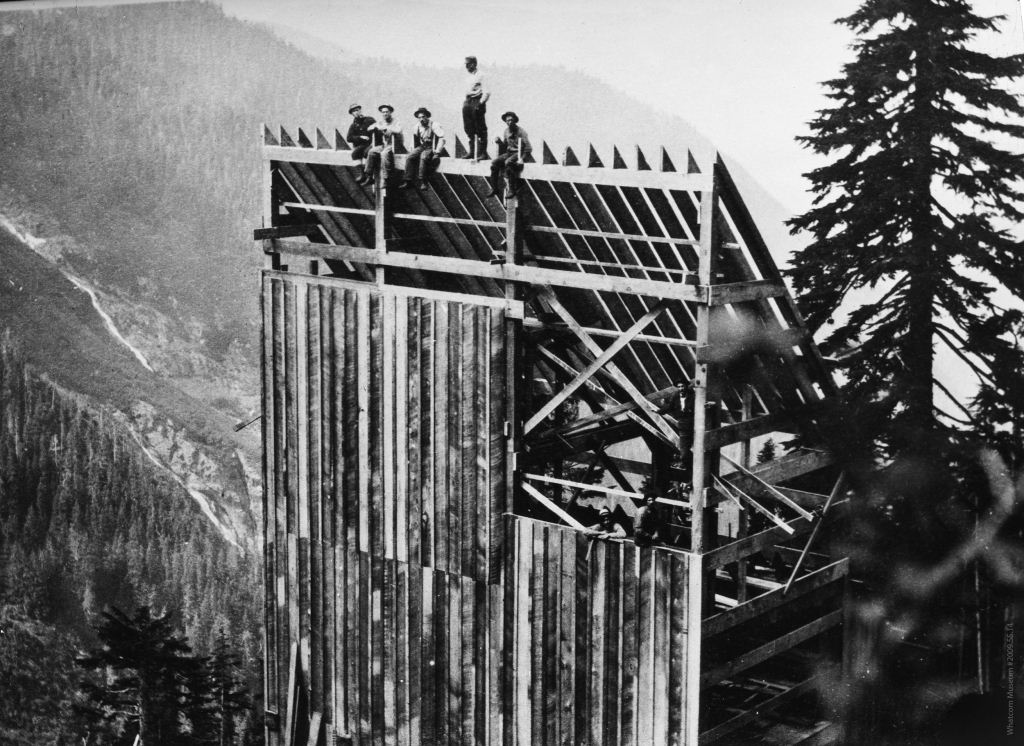
The Ajax is an old historic producer of rich pocket-gold ores, dating back to the early 1880’s. Most production came from the Montana side from four crosscut adits located above Ajax Lake on the north facing slopes of Ajax Mountain. Historically the gold ore averaged in excess of 4 oz/ton and was hauled by wagon two miles to a stamp mill built specifically for Ajax ore.
Cash Flow:
Annual net profit US $181 Million at 100 tons per hour.
Additional Information
The following technical document and reports are available for review:
2004 Jenkins Technical Summary
1985 West Ajax Drilling Program Assay Reports and Maps
1985 West Ajax Drilling Program Report
1984 N.C. Carter Geology Report
1984 BEMA Detailed Site Maps
1984 BEMA Industries Geology Report
1983 Jenkins West Mine Technical Report
1982 Jenkins East Mine Technical Report
1980 Feasibility Study & Economic Report
1904 Fred T. Greene Geology Report
Other information available for review:
BLM LR2000 Database Report Verifying Ownership
Independent Appraisal Report
Area and Site Maps
or Contact Peter - omnimetal@aol.com