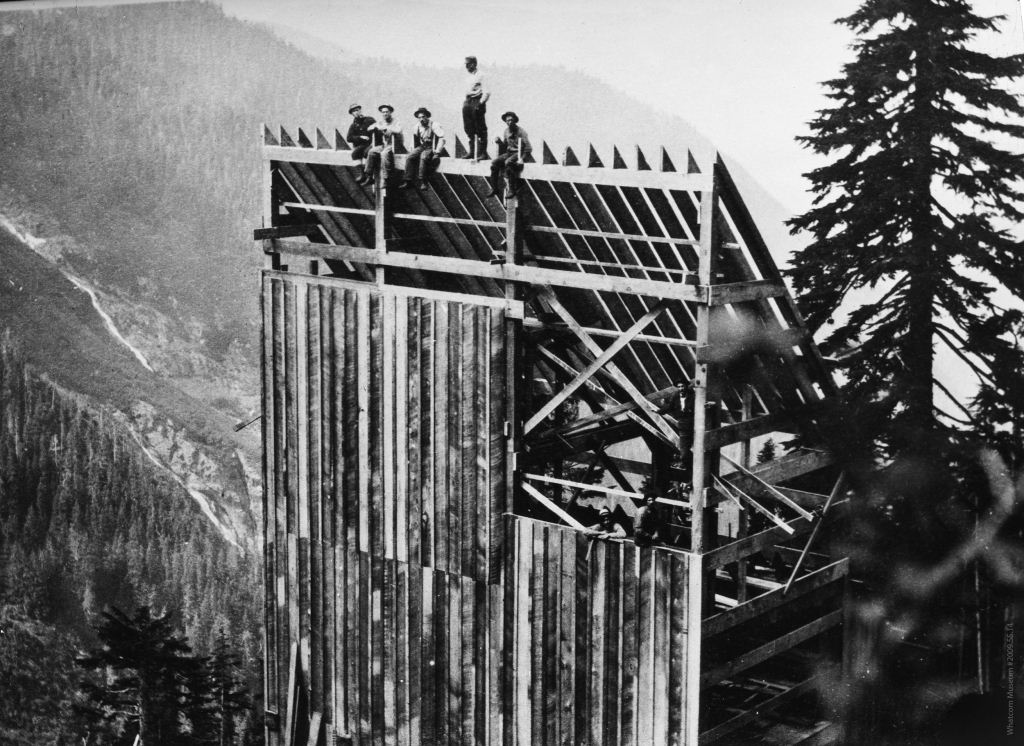
From a 1916 report – “The majestic empire of the Western Slope”
“The Copper Mountain Tunnel (or Roosevelt Tunnel as it is usually called) is at present about 1,800 feet into the mountain and only about 400 feet from the Roosevelt vein, which is one of the first of the larger ore deposits which the tunnel will tap. The vertical depth the tunnel will attain on the vein is about 800 feet, affording immense stoping facilities, and as the vein at the outcrop shows an ore body of 19 feet in width, it is apparent that with the tapping of this vein the company will become a producer second to none in the district.
Assays from the surface of this vein have shown values from $4 per ton in gold and about 8 percent copper up to $377.10 (18.24 ounces) per ton in gold (1916 price of gold $20.67 per ounce) and as the ores, as is the case in every other mine in the section, will increase in values with depth, it would appear that the company’s future success is assured.
In the near vicinity of the Roosevelt mine the Midnight Mining Company has opened up a rich vein of gold-copper ore and as this vein has a trend towards the holdings of the B. I. M. Co. it is expected that this vein will be tapped by the tunnel and the vein in its entire length be drained and not only will the B. I. M. Company have ownership to a large part of the vein but at the same time it will give the Midnight Mining Company an opportunity to mine its ore which up to this time on account of the heavy flow of water in their shaft has been impossible. The tunnel, in its onward course will tap several other known veins such as the Camp Bird and the Gold Ridge until it reaches its terminus at the I. X. L. mine, which is considered one of the most valuable and important of the company’s holdings. At the I. X. L. mine is an immense deposit of ore, averaging from $2.60 to $6.00 per ton on the surface, to $37.50 and $90.00 at a depth of 80 feet. The vein has been opened up by a crosscut tunnel at a depth of 40 feet, showing the vein to be 43 feet in width, and extending for several thousand feet. The general formation is a positive indication that the I. X. L. will be one of the best mines in the state, but, on account of the porphyry dikes and talcy deposits, with which the vein matter is associated, which gives water easy access to the workings, they realize the necessity of operating this mine through the Copper Mountain tunnel, and they are eagerly pushing the tunnel work forward with that aim in view.
On the Gold Ridge claims a very rich vein was discovered on the surface and several shafts and tunnel were driven endeavoring to open up and determine the trend of the vein. In tunneling, ore was found to contain values in gold and silver to the amount of $18.28, with considerable copper, and as assays showing up to $25,000 per ton in gold (1250 ounces per ton) and as high as 40 percent in copper have been found, they feel sure that the Gold Ridge mine will prove exceptionally good, and as it is but a short distance from the I. X. L., it can be easily worked through the Copper Mountain tunnel which will tap these veins at a depth of upwards a thousand feet. The Camp Bird mine, which is also owned by this company, is at present being worked by leasers under royalty.
The work in the Copper Mountain tunnel was first started by hand, but later a small steam compressor plant was installed and the tunneling pushed forward with machine drills. It was, however, realized that the steam plant was of insufficient capacity and as the company in the meantime had acquired title to the water right on Quartz Creek, a hydro-electric plant of over 400 horsepower capacity, involving an expenditure of about $30,000.00 and containing the most modern and up-to-date electrical machinery was installed. New equipment in the way of transformers, motors, compressor and ventilation fan were also installed in a new stone building at the entrance to the tunnel, which was completed in 1915, and at present the company is in position to drive the tunnel onward with great speed, at the same time as they have ample power for all mining and milling purposes. Electric lighting system has been installed in the buildings owned by the company, and electric power can also be used for the tramming of ore and for lighting the mine. Besides all power for their own use the company has over 200 horsepower electricity to dispose of to other mines in the district.
As is the case with most mining enterprises the company has been handicapped by lack of sufficient funds, but if the investing public was fully aware of the unusual possibilities and merits this company possesses, as well as the scrupulous care, economy and business tact used by the management, and were familiar with, the character and class of men at the head of this enterprise they would not hesitate to affiliate themselves with this company and aid in bringing success to this worthy enterprise which undoubtedly will ere long “make good” and give its stockholders liberal and ample reward. The company is backed by business men from the Eastern states and the president is the well known Col. R. B. Anderson of St. Louis, Mo., with offices at 5 1 8- S 19 Metropolitan building, who will be pleased to give any further information about the company that may be desired.”
1923 From – Pitkin Public School District Number Five, Issue 5,
“The Roosevelt Mine, under the direction of A. P. Nelson, was driving its tunnel into Copper Mountain to cut the Camp Bird and I. X. L. veins at depth. The company had recently purchased the mill from the Sandy Hook mine, and it was almost re-assembled on the Roosevelt property along Quartz Creek and ready for operation.”
From Minerals yearbook 1938
“The Manhattan Mining & Leasing Co. operated the Roosevelt Gold Mines Co. property under lease from June 25 to September 1, 1937, and then suspended business. The company treated 300 tons of ore in the 25-ton hydroelectric stamp-amalgamation mill on the property. The ore was mined chiefly from the Camp Bird claim in the Roosevelt group, but some was obtained from the Chicago-Climax mine and Little Jessie dump nearby.”