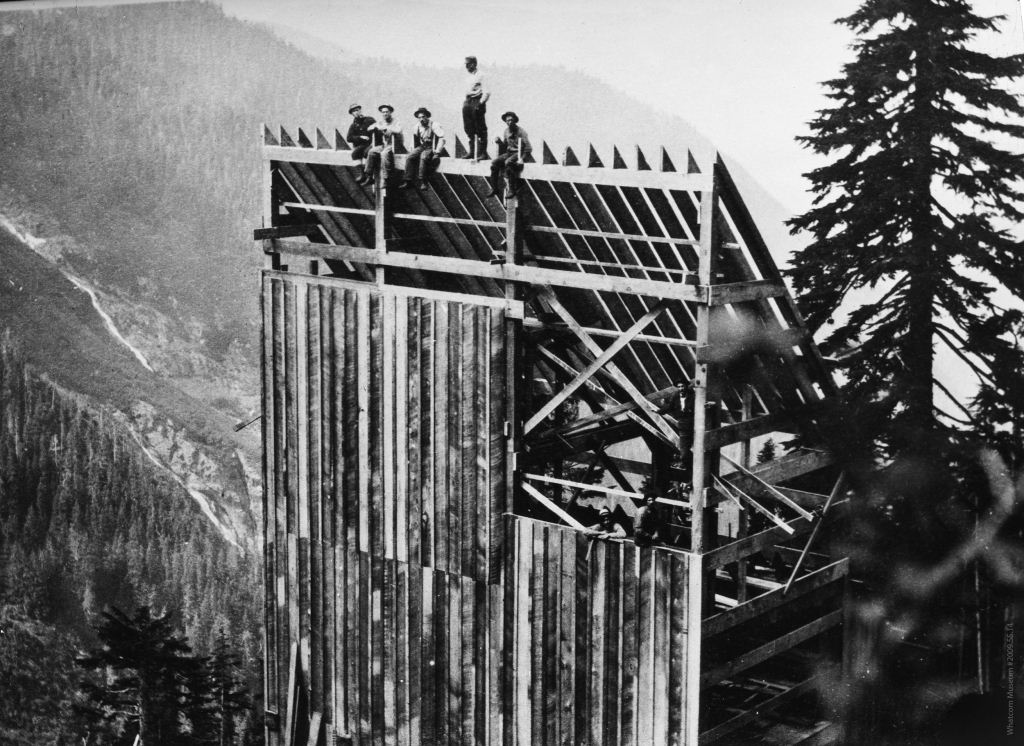
The War Eagle Mines were located in 1887 for copper by a German who bonded the property to English Company. Later the ground was several times relocated by others, amount whom WT McArdle, in 1895-96, mined and shipped 8 carloads of copper that averaged about 24 percent copper, 24 ounces of silver to the tone and 7 percent silica. These mines seem to be among the most important in the area.
The Contact District is located in northeastern Nevada approximately 20 miles south of the town of Jackpot and approximately 45 miles north of the town of Wells. The historic Contact townsite and the major historic mines are located just to the west of Highway 93 which connects Jackpot and Wells.
The first discoveries in the area took place in 1870 when James Moran found gold. However, no production took place. Additional gold and copper deposits were also discovered during the next couple of years. In 1872, a prospecting party of three men; Hanks, Lewis, and Noll, located a number of new deposits on China Mountain. This led to the opening of other mines by the end of 1872. Four separate but adjacent mining districts were organized: Salmon, Kit Carson, Porter (Portis), and Alabama. All of the mining districts were later consolidated into the Contact Mining District. Although no town formed, a small hotel was completed in April of 1874. The hotel was built to serve as a stop on the Toano and Idaho Fast Freight Line.
In 1876, an official of the Southern Pacific Railroad located a number of other deposits on China Mountain. A large number of Chinese workers were hired to work the mines on a commission basis. The most prominent of the early mines, the Boston, shipped copper ore to Swansea, Wales until 1880. However, production from this early flurry of activity was quite small. 1897 was a year of great promise. In January, 100 men were employed. By April, the number had risen to 200. The Salmon River Mining Company was formed by 20 miners who contributed $100 each for the purpose of building a 50-ton smelter. S.P. Kemper was elected president and oversaw the smelter’s construction. The smelter proved extremely unsuccessful and only processed 14 tons from the Bluebird Mine before closing.
By 1900, population had dropped to 85. Only five residents were left by 1905. The area saw several revivals in the 1930’s, 40’s and 50’s with a small town being built over the years, but has never made a big mark on the map. By time the Contact post office closed on August 31, 1962, the town was virtually empty. All told, the Contact district has produced 5.8 million pounds of copper, 360,000 pounds of lead, 127,000 ounces of silver, 18,000 pounds of zinc, and 1,200 ounces of gold.